
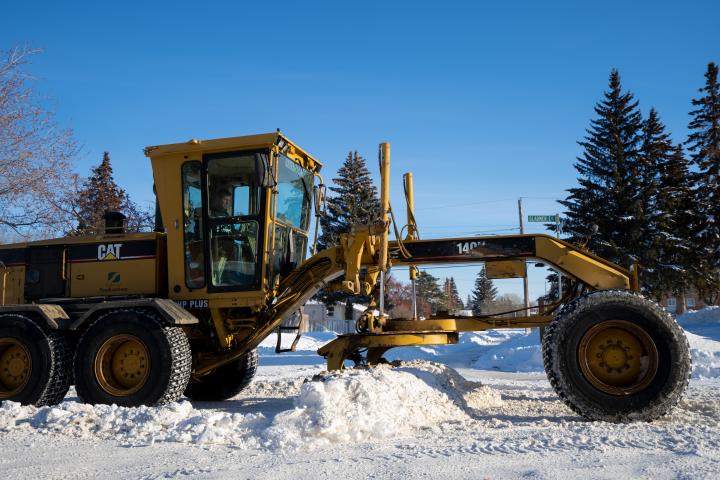
It was the winter that just wouldn’t end. By the time of the latest snowfall — April 24, 2026 — Saskatoon had seen 147 cm of snow.
It was the winter that just wouldn’t end. By the time of the latest snowfall — April 24, 2026 — Saskatoon had seen 147 cm of snow. If you’re thinking that seems like more than an average year, well, you’d be right. Saskatoon usually gets about 98 cm of snow during the winter season. That’s a full 150 per cent more snow. Yikes!
For the crews responsible for keeping streets safe and passable, that difference shows up in longer shifts and a consistent response that hasn’t let up.
Over the course of the 2025–26 winter, crews responded to 20 distinct weather events, about double what’s typical. Not every event meant a full-scale response, but each one required monitoring, coordination and action. Nine of those events triggered full snow operations.
On top of that, the constant snow, melt, freeze, repeat cycle that we saw so often complicated planning and forced crews to constantly adjust how and where they deploy resources.
This season, it all added up to more than 100,000 labour hours of clearing snow, maintaining traction, managing ice buildup, keeping emergency routes open and ensuring neighbourhood streets remain accessible over time.
The scale of the effort is easy to overlook when roads are clear. But each cleared lane represents a sequence of decisions; when to deploy, which routes to prioritize, how to respond to changing forecasts and road conditions.
For residents, winter driving can feel unpredictable. For crews, it’s a controlled response to that unpredictability, guided by planning and a lot of hours on the road. This season asked more of them than usual. And while the snow will eventually melt, the work that kept the city moving through it is worth some thought.